
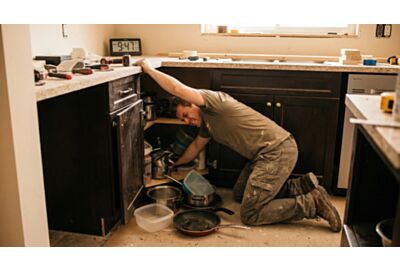
The Black Hole of the Kitchen: Why Corner Storage Can Make or Break Your Design
Every kitchen has one. It is that deep, dark, and seemingly bottomless cavern where Tupperware lids go to disappear and that heavy roasting pan you use once a year sits in dusty exile. We call it the "black hole" of the kitchen, but architects and designers know it more formally as the corner cabinet. For decades, these 90-degree intersections were the bane of homeowners' existence. You had two choices: reach so far back you’d practically have to climb inside the cabinetry, or simply write that space off as a total loss. But here is the thing most builders won't tell you—those wasted cubic inches are often the most valuable real estate in your entire floor plan. When you are working with 10 Percent Cabinetry, we look at these awkward angles not as obstacles, but as untapped opportunities for high-efficiency storage.
The frustration is real. You’re in the middle of a Sunday meal prep, the stove is humming, and you need that specific stainless steel mixing bowl. You know it’s in the corner. You start by pulling out three stacks of plates, a blender you forgot you owned, and a bag of flour that’s probably expired. By the time you reach the bowl, your workflow is shot. This isn't just an organization problem; it is a design failure. Modern kitchen organization solutions have evolved far beyond the basic fixed shelves of the 1980s. Today, we are seeing a revolution in how we approach these corner kitchen cabinets, moving toward "active" storage that brings the items to you, rather than forcing you to go hunting for them.
Think about the physics of a standard kitchen layout. The corner is where two lines of cabinetry collide. This creates a square of space that is roughly 24 inches deep from two different directions. Without a smart strategy, you end up with a massive 36x36 inch block of air that is effectively inaccessible. It is a classic design bottleneck. At 10 Percent Cabinetry, we’ve found that homeowners who invest the time to choose the right RTA corner kitchen cabinet configuration report significantly higher satisfaction with their overall kitchen remodel. Why? Because the corner is usually located right in the "work triangle"—that high-traffic zone between the sink, the stove, and the refrigerator. If the corner is clunky, the whole kitchen feels slow.
And honestly? That matters more than most people realize. A kitchen that "works" is one where you don't have to think. You reach, and the tool is there. You turn, and the spice rack is accessible. When we talk about kitchen corner storage, we are talking about reclaiming your time and your sanity. Whether you are dealing with a tiny galley kitchen or a sprawling open-concept space, the corner is the anchor. If you get it right, you maximize your square footage. If you get it wrong, you’re just paying for air that you can’t use. This guide is designed to pull back the curtain on how professionals handle these tricky zones, using the high-quality, durable options provided by 10 Percent Cabinetry to ensure your kitchen isn't just beautiful, but brilliantly functional.
Choosing the right solution isn't just about picking a door style; it's about understanding the geometry of your life. Do you cook for large groups? You’ll want heavy-duty pull-outs. Are you a minimalist? A sleek diagonal cabinet might be the visual break your eyes need. As we dive into the specifics of blind corner pull-outs versus Lazy Susan cabinets, keep your own cooking habits in mind. There is no "one size fits all" here, but there is definitely a "best fit for you." Let's stop treating the corner like a problem to be hidden and start treating it like the powerhouse of the kitchen it was always meant to be.
Layout Logic: Decoding Blind Corners vs. L-Shaped Configurations
Before you can pick the fancy hardware or the perfect finish, you have to understand the bones of your layout. In the world of cabinetry, not all corners are created equal. You generally fall into one of two camps: the "Blind Corner" or the "L-Shaped/Diagonal Corner." Each has a distinct personality, and choosing the wrong one for your specific floor plan can lead to some pretty awkward architectural "oops" moments—like a cabinet door that hits your dishwasher handle every time you try to open it. Trust us, that’s a mistake you only want to see in a "renovation fails" video, not in your own home.
The Anatomy of the Blind Corner
A blind corner cabinet is the stealthy option. From the outside, it looks like a standard cabinet door. However, that door only covers half of the unit; the other half is tucked behind the adjacent cabinet. It "blinds" into the wall. This is a favorite for designers who want a clean, seamless look with fewer vertical lines. But there is a catch: that hidden space is incredibly deep. Without the right corner cabinet solutions, a blind corner is where gadgets go to die. At 10 Percent Cabinetry, we specialize in blind corner pull-outs that utilize a "swing-and-pull" mechanism. These units basically unfold out of the darkness, bringing two tiers of shelving into the light. It is a sophisticated piece of engineering that makes a 24-inch deep void feel as accessible as a top drawer.
The L-Shaped and Diagonal Approach
If you prefer a more "open" feel, the L-shaped corner—often housing Lazy Susan cabinets—is the way to go. These cabinets usually feature a "pie-cut" door that is hinged in the middle. When you open it, the entire corner is exposed at once. It’s the most direct way to see everything you have. Then there is the diagonal cabinet, which cuts across the corner at a 45-degree angle. This is a bold choice. It creates a much larger interior cavity and provides a massive amount of countertop surface area. Many of our clients at 10 Percent Cabinetry choose a diagonal upper cabinet to house a microwave or a dedicated coffee station. It breaks up the hard 90-degree lines of a traditional kitchen and adds a bit of architectural interest that "pops."
Why Clearance Is Your Best Friend
Here’s the part most guides skip over: clearance. When you’re installing RTA corner cabinets, you have to account for the "protrusion factor." If your corner cabinet is right next to a stove, you need to ensure the oven handle doesn't block the cabinet door from opening. This is why we often use "fillers"—small strips of finished wood—to provide a 1-inch to 3-inch buffer. It might seem like a waste of space, but it’s the difference between a cabinet that opens 90 degrees and one that only opens 45 degrees. 10 Percent Cabinetry provides detailed specifications for all our units to help you avoid these clearance headaches. We aren't just selling boxes; we are selling a layout that actually works when you’re actually cooking. It’s about the "swing," the "glide," and the "click" of a perfectly installed corner unit.
Ultimately, the choice between a blind corner and an L-shaped unit comes down to your visual preference and the specific constraints of your walls. If your kitchen is small, an L-shaped RTA corner kitchen cabinet often feels less "heavy" and keeps the room feeling airy. If you have a long run of cabinets and want a high-end, custom-built look, the blind corner with a premium pull-out is the gold standard. Regardless of the path you take, the goal remains the same: eliminate the reach-in and maximize the pull-out. We want you to be able to see 100% of your items 100% of the time. No flashlights required.
The Power Players: Lazy Susans and Smart Pull-Out Technology
Once you’ve settled on the "shell" of your cabinet, it’s time to talk about the engine. The hardware you put inside your corner cabinet is what determines if you'll actually enjoy using your kitchen. At 10 Percent Cabinetry, we’ve seen a massive shift in homeowner preferences. People are moving away from static shelves and toward dynamic, moving parts. Let's break down the two heavy hitters in the industry: the classic Lazy Susan and the modern blind corner pull-out. These aren't just "nice-to-haves"—they are the workhorses of a functional home.
The Legend of the Lazy Susan
There is a reason the Lazy Susan has been a staple for decades: it’s simple, and it works. But forget those flimsy plastic versions you remember from your grandmother’s house. Modern RTA lazy susan cabinets from 10 Percent Cabinetry utilize heavy-duty wood or chrome-plated wire trays that can hold a surprising amount of weight. Think cast iron skillets, stacks of canned goods, or large bags of flour. The 360-degree rotation means that "the back" of the cabinet is a concept that simply no longer exists. One quick spin and your blender is front and center.
One pro-tip we always share: look for "adjustable" heights. Being able to move the top tray up or down by even an inch can be the difference between fitting your tallest stockpot and having to store it in the garage. We also recommend the "Super Susan" configuration, where the trays are mounted directly onto fixed shelves rather than a center pole. This provides even more stability and eliminates the risk of items falling down the center of the unit—a common gripe with older designs. It’s these small engineering tweaks that elevate 10 Percent Cabinetry products above the standard big-box store fare.
The Magic of Blind Corner Pull-Outs
If the Lazy Susan is the classic choice, the blind corner pull-out is the high-tech upgrade. Often called "Cloud" or "Magic Corner" organizers, these systems are a marvel of spatial efficiency. When you open the door, the first set of shelves glides out, and as you pull further, a second set of shelves slides over from the "blind" part of the cabinet into the opening. It is incredibly satisfying to watch. These are the ultimate kitchen organization solutions for people who want to store heavy appliances. Because the shelves are mounted on heavy-duty ball-bearing slides, they can handle the weight of a Stand Mixer or a large Food Processor without sagging. It turns the deepest part of your kitchen into a high-functioning appliance garage that disappears when the door is closed.
Maximizing the Diagonal Advantage
For those who choose a diagonal RTA corner kitchen cabinet, you’re playing a different game. Because the door is wider and the interior is deeper, you can often fit much larger items than you could in a standard 90-degree unit. We often see homeowners use these as "pantry corners," installing tiered shelving for spices, oils, and dry goods. The diagonal counter space above is also the perfect spot for a cutting board or a decorative display. It’s about creating a "zone." Instead of just a storage area, the diagonal corner becomes a functional workstation.
At the end of the day, 10 Percent Cabinetry focuses on durability. Whether you choose a spinning tray or a sliding shelf, the hardware needs to stand up to years of daily use. We use reinforced mounting points and smooth-close technology to ensure that your kitchen corner storage feels premium every time you touch it. You’re not just buying a cabinet; you’re buying the ease of a Sunday morning where everything is exactly where it’s supposed to be. That’s the real-world impact of smart design: it removes the friction from your life, one corner at a time.
Putting Theory into Practice: Real-World Scenarios for Your Corner Layout
It’s one thing to look at a catalog and see a gleaming kitchen; it’s quite another to stand in your own half-demolished workspace trying to figure out where the stand mixer is going to live. When we talk about kitchen organization solutions, we aren’t just talking about tidy drawers. We’re talking about the physical geometry of your daily life. Let’s get practical for a second. If you’re dealing with a cramped U-shaped kitchen, your corner strategy needs to be vastly different than if you’re building out a sprawling open-concept L-shape.
The "Heavy Lifter" Strategy for Blind Corners
Imagine this: you’ve got a deep blind corner. In the old days, that space was basically a graveyard for Tupperware lids and that fondue set you received in 2012. If you opt for blind corner pull-outs from 10 Percent Cabinetry, you’re changing the fundamental physics of that reach. My best advice for these units? Use them for the heavy stuff. I’m talking about cast iron Dutch ovens, gallon-sized jugs of olive oil, or that massive food processor. Because these professional-grade inserts bring the shelf to you, you aren’t straining your back. It’s a game-changer for accessibility. And honestly? If you’re aging in place or just tired of crawling on the floor with a flashlight, this is the single best investment you can make in your cabinetry.
The Baking Station: Diagonal Cabinet Magic
Now, let’s look at the diagonal corner. This is a favorite for many of our clients at 10 Percent Cabinetry because it softens the room's lines. But here’s the pro tip most people miss: the diagonal upper cabinet is the perfect "secret" baking hub. Because the cabinet is deeper than a standard 12-inch wall unit, it can swallow up oversized mixing bowls and stacks of cookie sheets that wouldn't fit anywhere else. Pair that with a RTA corner kitchen cabinet base, and you’ve created a dedicated zone. When you’re in the middle of a holiday flour-storm, having every bowl within a single pivot point makes the workflow feel effortless rather than frantic.
Avoiding the "Handle Bash" – A Critical Installation Tip
Here’s a detail that separates the amateurs from the pros. When you’re planning your corner cabinet solutions, you must account for the hardware. I’ve seen beautiful kitchens ruined because the drawer on the left hits the handle of the cabinet on the right. It sounds small, but it’s infuriating. At 10 Percent Cabinetry, we always recommend using fillers—usually about 1 to 3 inches—to ensure that your corner kitchen cabinets have the clearance to open fully without a "clink." It’s these tiny measurements that define whether a kitchen feels high-end or hacked together. Don't rush the floor plan; measure twice, then measure again just to be sure.
Consider the lighting, too. Deep corners are naturally dark. While you're installing your new RTA units, think about adding battery-operated motion sensor LEDs or hardwired tape lighting inside those blind corners. When that shelf slides out and everything is illuminated, it feels less like a storage unit and more like a high-end display. It’s about creating a space where you actually want to cook, not a space you’re fighting against every time you want to make pasta.
Expert Insights: Why Your Kitchen Corner Shouldn't Be an Afterthought
In the world of interior design, there’s an old saying: "Design is in the details." But in kitchen remodeling, I’d argue design is in the corners. Most homeowners spend 90% of their mental energy picking out the "hero" items—the island, the range hood, the farmhouse sink. The corners? They get treated like a secondary problem to be solved later. That is a massive mistake. If you don't solve the corner early, you're effectively throwing away 15% to 20% of your usable kitchen corner storage. That’s a lot of real estate to lose, especially when square footage comes at such a premium.
The Lazy Susan Reimagined
Let's address the elephant in the room: the "Lazy Susan." For a while, these got a bad rap for being flimsy or difficult to clean. But modern engineering has changed the game. When you look at the RTA lazy susan cabinets offered by 10 Percent Cabinetry today, you aren't looking at cheap plastic trays on a shaky pole. You’re looking at solid wood or high-density polymer shelves with ball-bearing swivels that glide silently. The beauty of a 360-degree rotation is that it eliminates the "dark back corner" entirely. It’s the ultimate solution for spices, canned goods, or even small appliances. Is it the right choice for everyone? Not necessarily. If you prefer a sleek, minimalist exterior, the 90-degree L-shape of a Lazy Susan might feel a bit traditional. But for pure, unadulterated access? It’s hard to beat a classic done right.
The Myth of "One Size Fits All"
What most people get wrong is thinking there is a "best" corner solution. There isn't. There is only the best solution for your specific cooking style. I’ve worked with professional chefs who swear by open shelving in corners because they want to grab a sauté pan in half a second. I’ve worked with families who need blind corner pull-outs because they need to hide a mountain of kid-friendly snacks. At 10 Percent Cabinetry, we focus on providing the variety—from diagonal units to RTA corner cabinets—because every kitchen "flow" is unique. The industry is moving away from rigid standards and toward hyper-customization, even in the RTA (Ready-to-Assemble) space. You no longer have to pay custom-cabinet prices to get a kitchen that actually functions like a custom build.
Another industry shift we’re seeing is the integration of technology into these hardware systems. Soft-close hinges aren't just a luxury anymore; they’re a standard. When you’re slamming a heavy corner pull-out shut, you want that hydraulic dampening to kick in so you don’t rattle your fine china. We make sure that our hardware is over-engineered for the weight it’s expected to carry. Why? Because a corner cabinet that sags after two years isn't a storage solution—it’s a liability. Real quality shows up in the parts you don't see: the slides, the pivots, and the thickness of the shelving. That’s where 10 Percent Cabinetry earns its reputation.
The Final Verdict: Reclaiming Your Kitchen’s Potential
At the end of the day, a kitchen remodel is an exercise in problem-solving. You are taking a set of constraints—walls, plumbing, budget—and trying to extract the maximum amount of joy and utility from them. The corners of your kitchen represent the greatest opportunity for that "extra" utility. Whether you decide to go with the fluid motion of Lazy Susan cabinets or the hidden complexity of blind corner pull-outs, the goal remains the same: stop wasting space. You deserve a kitchen where every square inch works as hard as you do.
Choosing the right corner kitchen cabinets isn't just about aesthetics, though a beautiful finish certainly helps. It’s about removing the daily friction of a poorly designed space. It’s about that moment when you reach for a pot and it’s right there, instead of buried behind a stack of lids. By choosing 10 Percent Cabinetry, you’re not just buying boxes; you’re investing in a system designed to make your life easier. Our RTA corner kitchen cabinet options provide that perfect bridge between high-end functionality and DIY-friendly assembly. You get the strength of solid construction without the middleman markup, which is something we take immense pride in.
So, where do you go from here? Start by looking at your current kitchen. Identify the "dead zones" where things go to be forgotten. Measure those corners and visualize how much more kitchen corner storage you could have with a modern pull-out or a rotating tray. Don't be afraid to mix and match solutions based on your needs. Maybe the upper corner gets a diagonal cabinet for your mugs, while the base corner gets a blind pull-out for the heavy appliances. There are no rules, only results.
The transformation of a kitchen from "awkward" to "intuitive" is one of the most satisfying home projects you can undertake. With 10 Percent Cabinetry, you have the tools, the hardware, and the kitchen organization solutions to make it happen. Don't let your corners stay "blind." Bring them into the light, give them a purpose, and watch how much more you enjoy your home. Ready to stop settling for a kitchen that doesn't work? Explore our full range of RTA corner cabinets today and finally claim the storage you’ve been missing. Your future self—the one effortlessly reaching for the blender on a busy Monday morning—will thank you.