
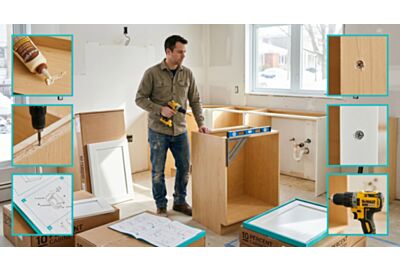
The Reality of the Unboxing: Why Precision in RTA Assembly is Non-Negotiable
You’ve seen the photos—those sun-drenched kitchens with gleaming quartz countertops and perfectly aligned, shaker-style cabinets that look like they cost a small fortune. The secret, as many savvy homeowners have discovered, is that those high-end looks often come from high-quality Ready-to-Assemble units. But here is the cold, hard truth: the distance between a "professional designer" finish and a "I did this in my garage over a long weekend" disaster is measured in sixteenths of an inch. When you first crack open the boxes from 10 Percent Cabinetry, the smell of fresh wood and the promise of a transformed home are intoxicating. You’ve saved thousands of dollars by opting for rta kitchen cabinets, and the finish on the door faces looks spectacular. But then you look at the piles of panels, the bags of hardware, and the cryptic diagrams. That’s when the "DIY panic" usually sets in. It’s a pivotal moment. Do you rush through it to see the finished product, or do you treat the assembly like the precision engineering project it actually is?
Most people assume that because the pieces are pre-cut, they are foolproof. They aren't. Even the most premium materials can be compromised by a few RTA Cabinets Assembly Mistakes that seem minor at the time but snowball into massive headaches once the countertops are installed. Think about it: your kitchen cabinets aren't just decorative boxes. They are structural components that have to support hundreds of pounds of stone, survive the constant humidity of a boiling pasta pot, and withstand the literal thousands of times a year your family will slam the doors. If the box isn't square, the doors will never hang straight. If the glue isn't applied correctly, the joints will eventually creak and sag. We’ve seen it all—from stripped screw holes caused by over-eager power drills to cabinets that look perfect on the floor but won't fit against the wall because the homeowner forgot that floors are rarely, if ever, actually level.
Choosing 10 Percent Cabinetry is the first step toward a successful DIY kitchen renovation, but the assembly phase is where the real "sweat equity" happens. It’s not just about following a manual; it’s about understanding the why behind the instructions. Why do we use wood glue on a cam-lock system? Why does the sequence of panels matter? This guide isn't just a list of "dos and don'ts." It’s an inside look at the professional techniques that separate a shaky, amateur cabinet from a rock-solid installation that lasts twenty-five years. And honestly? Most of these mistakes are incredibly easy to avoid if you know what to look for before you pick up the screwdriver. You’re not just building a box; you’re building the foundation of your home’s most important room. Let’s make sure you do it right the first time, avoiding the common pitfalls that turn a dream project into a cautionary tale.
The allure of the RTA model is the massive cost savings, but those savings quickly vanish if you have to re-order parts or, worse, hire a professional to fix a botched installation. That’s why cabinet assembly tips aren't just helpful suggestions—they are your insurance policy. We’re going to dive deep into the mechanical side of things, looking at torque settings, structural integrity, and the subtle art of squaring a cabinet. Because at the end of the day, when you’re leaning against your new island with a cup of coffee, you don’t want to be staring at a 1/8th-inch gap between two doors that simply won't align because of a mistake you made three weeks prior. You want perfection. And with 10 Percent Cabinetry, perfection is entirely within your reach, provided you respect the process.
The Hidden Dangers of "Winging It": Structural Integrity and Tool Mastery
There is a specific kind of hubris that comes with a "Project Saturday." We’ve all felt it—the desire to throw the instruction manual in the recycling bin and just figure it out. With 10 Percent Cabinetry, the components are designed to fit together with logical precision, but "logical" doesn't always mean "obvious." One of the most frequent rta cabinet assembly errors isn't about failing to follow a step, but about the force used to execute it. Most DIYers reach for their 18V impact driver the moment they see a screw. This is a mistake that can ruin a cabinet in seconds.
The Torque Trap: Why Your Power Drill is Your Enemy
High-torque power drills are fantastic for framing a deck, but they are often too aggressive for cabinet assembly. When you are working with the high-density fiberboard (HDF) or plywood panels used by 10 Percent Cabinetry, an over-tightened screw won't just sit flush—it will strip the wood fibers entirely. Once those fibers are stripped, the screw has nothing to "bite" into, and the structural integrity of that joint is compromised. Professionals often use a manual screwdriver for the final quarter-turn, or at the very least, they set their drill’s clutch to the lowest possible setting. If you hear that "crack" sound? You’ve gone too far. You want the hardware to be snug, not strangled. A stripped hole might seem like something you can hide with a bit of filler, but in the long run, it leads to wobbling and failure under the weight of heavy dishware.
The Dry-Fit Ritual
Here’s something most guides skip: the dry-fit. Before you apply a single drop of wood glue—which we’ll talk about in a moment—you should assemble the main box components without permanent fasteners. Why? Because it’s the only way to verify that you have every piece, that every groove is clear of debris, and that you actually understand how the panels interlock. It takes an extra five minutes, but it prevents the "glue-covered disaster" scenario where you realize halfway through that a panel is upside down. When you dry-fit 10 Percent Cabinetry units, you get a feel for the tolerances. If something feels like it needs to be forced, stop. Usually, it means there is a bit of sawdust in a channel or a bracket is slightly misaligned. Forcing it usually leads to a cracked face frame, and that is a heart-wrenching mistake that is difficult to hide.
Squaring: The Geometry of a Successful Kitchen
A cabinet that looks square to the naked eye often isn't. This is where cabinet alignment issues begin. If your cabinet box is even a tiny bit "racked" (tilted into a trapezoid shape rather than a perfect rectangle), your doors and drawers will never sit straight. The solution is a simple trick from the carpentry world: measure the diagonals. Once the box is together but before the glue sets or the back panel is fully tacked on, measure from the top-left corner to the bottom-right, then from the top-right to the bottom-left. If those two numbers aren't identical, your cabinet is crooked. You need to gently nudge the box until those numbers match perfectly. This is the foundation of your entire kitchen. If the boxes aren't square, the 10 Percent Cabinetry soft-close hinges—as high-quality as they are—won't have enough adjustment range to fix the visual gap. Precision at this stage saves you hours of frustration during the final install.
Professional Secrets: Beyond the Basic Assembly Instructions
If you want your kitchen to feel like it was installed by a high-end contractor, you have to do what they do. They don't just follow the "minimum viable product" instructions; they add layers of durability that ensure the kitchen survives the chaos of daily life. When assembling 10 Percent Cabinetry, think of yourself as a craftsman, not just a consumer. The difference is in the details that you can't see once the cabinets are screwed to the wall, but that you feel every time you open a drawer.
The Glue Philosophy
Many RTA systems are designed to hold together with just cam locks and screws. And they will... for a while. But if you want a kitchen that feels "solid as a rock," you must use wood glue on every structural joint. Wood glue creates a chemical bond between the fibers of the panels that is actually stronger than the wood itself. When you combine the mechanical fastening of 10 Percent Cabinetry hardware with a high-quality wood glue, you eliminate the micro-movements that cause cabinets to squeak or loosen over time. Just be sure to keep a damp cloth handy to wipe away any squeeze-out immediately. Glue left to dry on the interior finish can be a nightmare to remove later, and it’s a telltale sign of an amateur job. It’s about creating a monolithic structure that can handle the sheer weight of a granite or quartz slab without flinching.
Leveling: The Floor is a Lie
Here is a fundamental truth of home construction: your floors are not level, and your walls are not plumb. If you assemble your cabinets and simply set them on the floor, they will follow the slope of your house. This leads to drawers that drift open on their own and countertops that have ugly gaps. Professional installers spend 70% of their time leveling and 30% actually "installing." Use a long spirit level—or better yet, a laser level—to find the highest point of your floor and work from there. Shims are your best friend. When installing 10 Percent Cabinetry, you aren't just looking for "flat"; you are looking for a perfectly level plane across the tops of all units. This is critical for the countertop fabricators. If your cabinets are uneven, the stone might crack under tension. It’s an easy thing to overlook during the excitement of assembly, but it’s the most common reason for structural failure down the road.
The Art of the "Final Tune"
One of the most rewarding parts of using 10 Percent Cabinetry is the high-end hardware. The hinges and drawer glides are engineered for 6-way adjustment. Most DIYers finish the assembly, hang the doors, and if they look "okay," they stop. But a professional spends an hour at the end of the job just "tuning" the doors. You can adjust the height, the depth, and the lateral position of every door face. This allows you to achieve perfectly uniform "reveals"—the gaps between the doors. When those lines are perfectly straight and consistent across the whole run of cabinets, the kitchen looks expensive. It’s the final flourish that validates all your hard work. Don't settle for "close enough." Take the time to dial in those adjustments until every line is crisp. It’s the difference between a project that looks "DIY" and one that looks like a custom showroom installation.
By avoiding these common RTA mistakes and treating the assembly with the respect it deserves, you're not just saving money; you're building a superior kitchen. 10 Percent Cabinetry provides the quality components, but you provide the craftsmanship. Together, that's a winning combination for any DIY kitchen renovation. Remember, the goal isn't just to finish the kitchen—it's to finish it so well that no one believes you did it yourself.
Mastering the Build: Practical Techniques for a Flawless Finish
Once you have all your components laid out and your tools ready, the real work begins. But here is the thing: assembling 10 Percent Cabinetry isn't just about following a diagram; it is about understanding the physics of the box. Most people rush through the initial joining of the panels, thinking they can "fix it in post" once the cabinets are on the wall. That is a recipe for disaster. The foundation of a high-end kitchen starts on your assembly table, not your kitchen floor.
The Golden Rule of the Dry Fit
Before a single drop of wood glue touches a joint, you need to perform a complete dry fit. Why? Because even with the precision engineering of 10 Percent Cabinetry, human error during the "unboxing" phase can lead to misplaced parts. Imagine getting halfway through a glue-up only to realize you have the left-side panel for a different cabinet size. It happens more than you’d think. A dry fit allows you to verify the part count and ensure the cam locks or wood screws align perfectly. It also gives you a "rehearsal" for the actual assembly, reducing the panic that sets in once the glue starts to tack up.
Squaring: The Diagonal Method
If your cabinet box isn't perfectly square, your doors will never hang straight. You could spend six hours fiddling with hinge adjustments and still have a 1/8-inch gap that drives you crazy every time you walk into the kitchen. To avoid these cabinet alignment issues, use the diagonal measurement trick. Once the box is assembled but before the back panel is fully secured or the glue has dried, measure from the top-left corner to the bottom-right corner. Then, measure from the top-right to the bottom-left. If those two numbers aren't identical—down to the sixteenth of an inch—your cabinet is a trapezoid, not a rectangle. Gently rack the box until those numbers match. Only then should you finish securing the back panel, which essentially "locks" the squareness in place.
And honestly? This is the step most DIYers skip because they assume the pre-drilled holes will force the box into a square. They won’t. Wood is a natural material that can flex. You have to be the one to dictate the final shape. When you're working with rta kitchen cabinets, this five-minute check is what separates a professional-looking kitchen from one that feels slightly "off."
Hardware Management and the Low-Torque Secret
We see it all the time: a homeowner buys a high-powered impact driver and proceeds to strip every single screw head or, worse, crack the plywood panels by over-tightening. These tools are great for framing a deck, but they are far too aggressive for rta cabinet assembly. Switch to a manual screwdriver for the final half-turn, or at the very least, set your drill's clutch to a very low setting. You want the screw to be snug, not buried. If you hear the wood creak, you’ve gone too far.
For the drawer glides and hinges, precision is everything. Most 10 Percent Cabinetry units come with high-quality soft-close hardware. These components have built-in adjustment screws. Before you mount the drawers into the boxes, make sure the glides are perfectly level and set back at the exact depth specified in the manual. Even a slight tilt in the glide will cause the drawer to creep open or bind when you try to close it. It’s these small, mechanical details that determine whether your kitchen feels like a luxury upgrade or a budget compromise.
The Expert Perspective: Why RTA Often Gets a Bad Rep (And How to Win)
There is a lingering myth in the home improvement world that RTA cabinets are somehow "lesser" than pre-assembled units. Usually, this comes from people who had a bad experience with cheap, particle-board furniture from a big-box retailer. But here is the reality: 10 Percent Cabinetry uses the same high-grade plywood and solid wood faces you’d find in a custom shop. The difference isn't the material; it’s the person holding the screwdriver. When you choose the RTA route, you are effectively acting as the quality control department of a professional cabinet shop.
The Structural Integrity Debate: Glue vs. Fasteners
One of the most common RTA Cabinets Assembly Mistakes is relying solely on the mechanical fasteners (like cam locks or screws) provided in the box. Professional installers will tell you that while the hardware holds the pieces together, the glue provides the long-term structural integrity. Think of the screws as a temporary clamp while the glue dries. Over years of use—opening and closing heavy drawers filled with cast-iron pans—mechanical fasteners can loosen. A bead of high-quality wood glue in every joint creates a chemical bond that ensures your 10 Percent Cabinetry remains rock-solid for a decade or more. If you skip the glue, you're essentially building a cabinet with an expiration date.
Contextualizing the DIY Savings
Why do people choose RTA? Usually, it is to save that 40-50% markup that comes with pre-assembled shipping and labor. But that "saving" is actually a transfer of value. You are paying yourself for the labor. If you rush the job, you are effectively paying yourself a very low wage to do a mediocre job. Experts look at DIY kitchen renovation as a craft. When you take the time to level your base cabinets using laser levels and shims, rather than just "eyeballing" the floor, you are performing the exact same steps a master carpenter would. The industry secret is that many "custom" cabinet shops actually order RTA components themselves and simply charge you for the assembly. By doing it yourself with 10 Percent Cabinetry, you aren't getting a cheaper product; you are just cutting out the middleman’s labor fee.
Avoiding the "Good Enough" Trap
In our experience, the point where most projects fail is at the 90% mark. The cabinets are up, the counters are on, and the homeowner is tired. They look at a drawer that is slightly crooked or a door that rubs against the frame and think, "I’ll fix that later." But they never do. This is where common RTA mistakes become permanent eyesores. A professional knows that the last 10% of the job—the fine-tuning of the hinges, the caulking of the crown molding, and the perfect alignment of the handles—is what defines the entire project. Don't let "good enough" be the standard for your home. Take the extra day to walk through the kitchen and adjust every single hinge until the lines are perfectly parallel. That is the mark of a pro build.
The Final Word: Turning a Box of Parts into a Dream Kitchen
Building your own kitchen is a massive undertaking, and it’s okay to feel a bit intimidated when those flat-packed boxes arrive on your driveway. But remember, the goal isn't just to get the cabinets on the wall; it’s to create a space that functions perfectly and looks incredible. By focusing on the details we’ve discussed—proper squaring, the judicious use of wood glue, and the refusal to use high-torque power tools—you are already ahead of 90% of DIYers. The beauty of 10 Percent Cabinetry is that the engineering is already done for you; you just have to provide the patience and the precision.
As you move through your DIY kitchen renovation, keep the "professional mindset" at the forefront. This means treating every cabinet box as a standalone project that requires your full attention. Don't try to assemble ten cabinets at once. Instead, treat the first one as a learning curve, the second as a practice run, and the rest as a streamlined production line. This methodical approach is the best way to avoid the common RTA mistakes that lead to frustration and wasted materials. And if you ever find yourself stuck, go back to the 10 Percent Cabinetry manual. It’s there for a reason, and it contains the specific nuances of your particular model that no general guide can cover.
Is it a lot of work? Yes. But when you finally peel back the protective film on those cabinet doors and see a perfectly aligned, soft-closing kitchen that you built with your own two hands, the satisfaction is immense. Not to mention the thousands of dollars you’ve kept in your bank account. These cabinet assembly tips are your roadmap to success, but your own attention to detail is the engine that will get you there.
If you're ready to start your journey, remember that quality starts with the right product. Choose 10 Percent Cabinetry for a foundation of solid wood and intelligent design. Then, take your time, measure twice, and don't be afraid to ask for help if a cabinet box isn't squaring up. Your dream kitchen is waiting inside those boxes—now go out there and build it right. For more resources on rta cabinet assembly or to browse our latest styles, visit our catalog and see how we can help you transform your home without the custom-cabinet price tag.